
Public Health Through the Ages
Public health has been part of everyday life for thousands of years, often in ways we may not even realize. From ancient sanitation systems to vaccines, disease tracking and emergency preparedness, the field has continually evolved to meet the needs of communities. Take a quick trip through some of the milestones that brought us to where we are today.
2000 B.C. — Early sanitation systems
Cities in the Indus Valley developed sophisticated drainage and wastewater-disposal systems, demonstrating and early organized approach to managing water and waste in densely populated communities.
400 B.C. — Health and environment
Writing associated with Greek physician Hippocrates advanced the idea that disease had natural causes and could be influenced by factors such as water, diet, climate and living conditions.
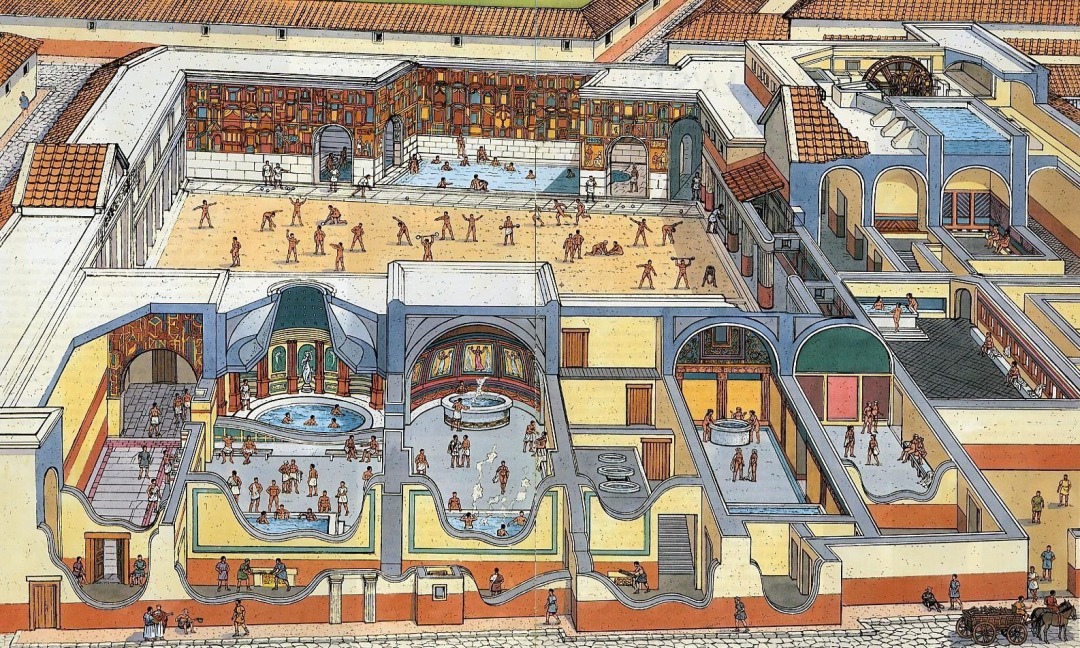
500 B.C.–500 A.D. — Roman public health infrastructure
The Romans built aqueducts, sewers, public baths and other infrastructure to supply water and manage waste in growing communities. These systems influenced later approaches to urban sanitation and public infrastructure.
1348 — Quarantine emerges
During recurring plague outbreaks, European port cities began isolating arriving travelers and ships to slow the spread of disease. Ragusa—now Dubrovnik—established one of the earlier documented organized quarantine systems. Venice later became a leader in quarantine stations and other disease-control measures.
1662 — Birth of health statistics
John Graunt analyzed London’s birth and death records, identifying patterns in mortality and laying groundwork for vital statistics and modern epidemiology.
1721 — African knowledge advances smallpox prevention
Onesimus, a West African man enslaved in Boston, shared knowledge of smallpox inoculation practiced in parts of Africa. His account influenced Cotton Mather and physician Zabdiel Boylston during a deadly Boston outbreak and helped introduce the practice in the American colonies.
1796 — The first successful vaccine
English physician Edward Jenner demonstrated that inoculation with material associated with cowpox could protect against smallpox, laying the foundation for modern vaccination.
1798 — Federal support for seaman’s health
Congress established a system of federally supported marine hospitals to provide care for sick and injured merchant seamen. The system became the Marine Hospital Service and eventually evolved into the U.S. Public Health Service.
1850s — Florence Nightingale uses data to improve health
British nurse and statistician Florence Nightingale used mortality data and visualizations to advocate for sanitation and health reforms in military hospitals. Her work demonstrated how data could guide public health decisions and improve health care.
1854 — John Snow and cholera
British physician John Snow traced an 1854 cholera outbreak in London to a contaminated public water source, demonstrating the power of epidemiology as a public health tool.
1860s — Germ theory transforms public health
Research by scientists including Louis Pasteur provided evidence that microorganisms could cause contamination and disease. Germ theory transformed approaches to sanitation, infection control and disease prevention.
1881-1900 — Mosquito transmission of yellow fever established
Cuban physician Carlos Juan Finlay proposed that mosquitoes transmitted yellow fever. Nearly two decades later, the U.S. Army Yellow Fever Commission led by Walter Reed confirmed the theory, leading to mosquito control measures that dramatically reduced the disease.
1882 — Tuberculosis bacterium identified
German physician Robert Koch identified the bacterium that causes tuberculosis, demonstrating how laboratory science could identify the causes of infectious disease.
1889 — W.E.B. Du Bois examines health and inequality
Scholar W.E.B. Du Bois used data and community-based research to document how social and environmental conditions affected the health of Black residents in Philadelphia. His work anticipated today’s understanding of social determinants of health and health inequities.
1902 — The federal public health role expands
The Marine Hospital Service was renamed the Public Health and Marine–Hospital Service, reflecting its expanding responsibilities for disease prevention and public health.
1908 — Alice Hamilton advances occupational health
Physician Alice Hamilton investigated illnesses caused by workplace exposure to lead and other industrial hazards. Her research helped establish occupational health as an important field of public health and supported reforms to protect workers.
1910-1911 — Wu Lien-the controls pneumonic plague
During a deadly pneumonic plague outbreak in northeastern China, physician Wu Lien-the promoted masks, isolation, travel restrictions and other infection control measures. He also organized an international conference to share findings and strengthen the response.
1918 — Influenza pandemic
A devastating influenza pandemic spread around the world, killing millions and demonstrating the enormous impact infectious diseases could have on populations and communities.
1946 — CDC is established
The Communicable Disease Center opened in Atlanta with an initial emphasis on controlling malaria and other infectious diseases. It eventually became the Centers for Disease Control and Prevention and expanded its work into nearly every area of public health.
1948 — World Health Organization is established
The World Health Organization began operations to coordinate international efforts to prevent disease and improve health. Its constitution defined health as encompassing physical, mental and social well-being—not simply the absence of disease.
1955 — Polio vaccine licensed
The first widely used polio vaccine was licensed in the United States. Mass vaccination campaigns dramatically reduced the incidence of polio and demonstrated the power of disease prevention through vaccination.
1962 — Clark County Health District begins operations
The Clark County Health District began operations June 5, 1962, charged with protecting the health of Southern Nevada residents and visitors. Its first officers were housed in a temporary structure built as an Army Medical Station during World War II.
1964 — Smoking recognized as a major public health issue
The U.S. Surgeon General released a landmark report linking cigarette smoking to lung cancer and other serious health effects, helping accelerate modern tobacco-control efforts.
1980 — Smallpox eradicated
Following an extensive international vaccination and surveillance campaign, the World Health Organization declared smallpox eradicated. It remains the only human infectious disease eradicated worldwide.
1981 — AIDS epidemic recognized
The first official U.S. reports of what would become known as AIDS were published in 1981. The epidemic transformed infectious-disease surveillance, biomedical research, health education and public health communication.
2003 — SARS highlights global health threats
SARS spread across international borders, underscoring the need for global disease surveillance, rapid information sharing and coordinated public health responses.
2020 — COVID-19 pandemic
In March 2020, the World Health Organization characterized COVID-19 as a pandemic. The global emergency brought vaccination, testing, epidemiology, disease surveillance and public health preparedness into the daily lives of billions of people.
Today — Public health is everywhere
Public health encompasses infectious and chronic disease prevention, environmental health, food safety, maternal and child health, emergency preparedness, injury prevention, health education and efforts to address the social conditions that influence health.